

Walter White started out intelligent, innocent, and weak.... took a long hard look at the cards he had been dealt and decided he would rather be intelligent, ruthless, and deadly.
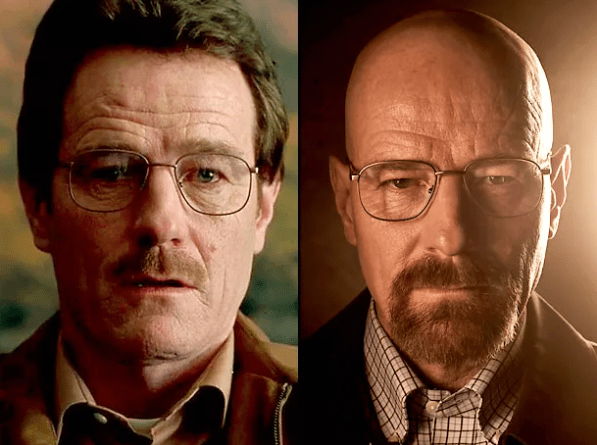
Like the Heisenberg everyone knows from Breaking Bad, the German physicist he based his alias on - Werner Heisenberg - was also brilliant, and was also faced with some harsh realities. He was best known for the Heisenberg Uncertainty Principle, which he published in 1927 - and for his Nobel Prize in Physics, which he won in 1932 “for the creation of quantum mechanics.” If he had retired young and become a folk singer he would still have gone down in history as one of the greatest physicists of all time.
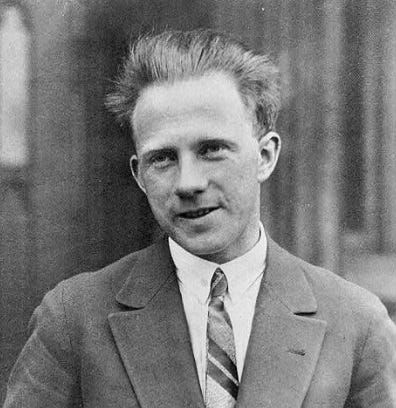
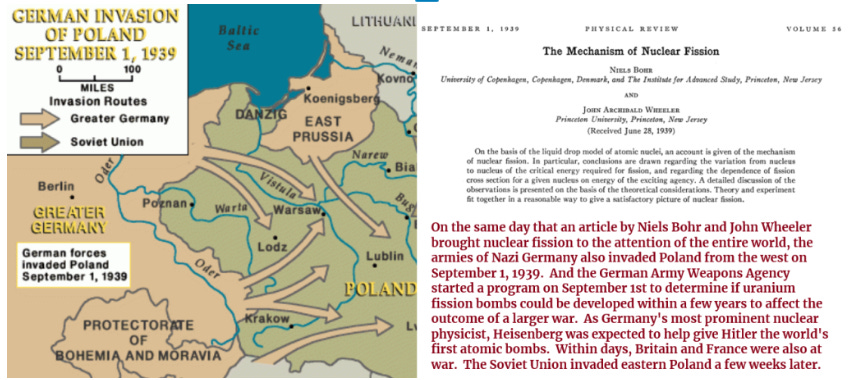
But he wasn’t old enough to retire [born December 5, 1901 - Happy Birthday Heisenberg!] and instead he was Germany’s top nuclear physicist at a pivotal time in history when Adolf Hitler and his Nazi Party came to power in 1933. Then WWII started right after some other German physicists proved that uranium atoms could be ripped apart by nuclear fission to release enough energy for bombs a million times more powerful than conventional explosives. The details of fission were published on September 1, 1939 - the same day Germany invaded Poland and started WWII in Europe.
Like Walter White, Werner Heisenberg was also a brilliant man tempted towards corruption. He was a patriotic German who wanted to see Germany regain its former glory. But… not led by Hitler. Imagine, as a scientist whose career had peaked in the early 1930s with a Nobel Prize - having a chance to invent the most powerful device ever created and win the race every major country on Earth was hoping to win. In the fictional, alternate-history world of Philip K. Dick’s The Man in the High Castle, Heisenberg’s patriotism and quest for glory trumped his distaste for Nazis.
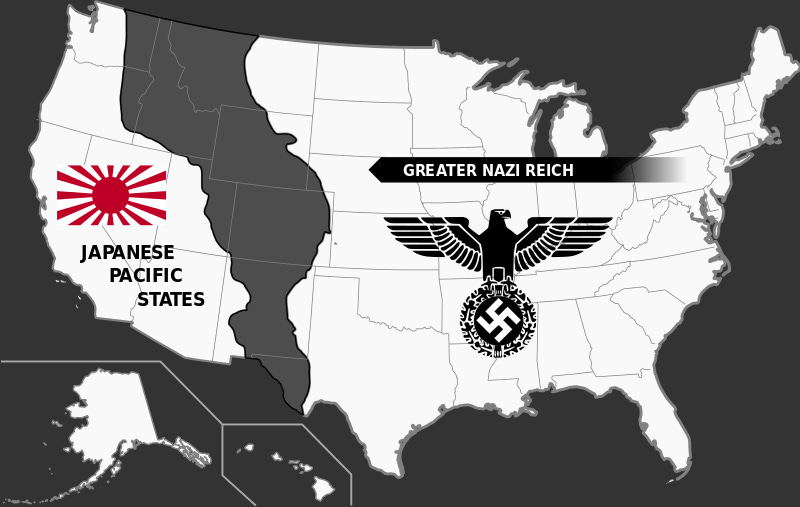
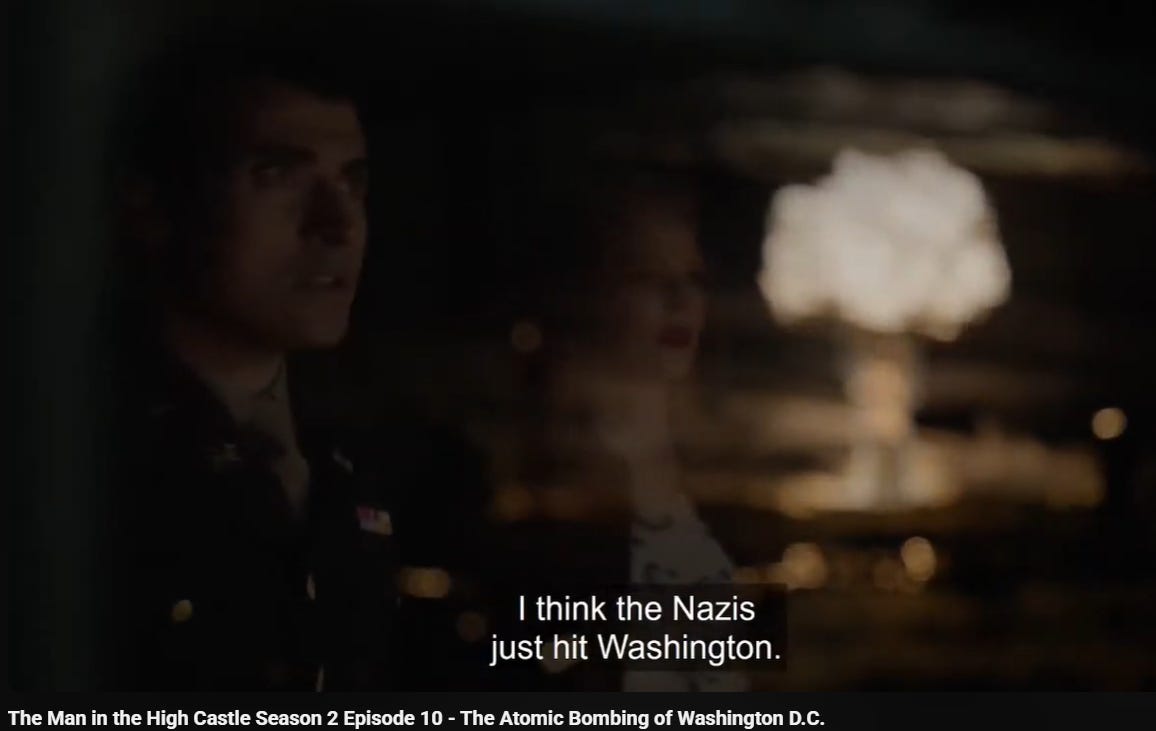
Germany wins WWII after using “The Heisenberg Device.” “The Heisenberg Device is the official name for the Atomic Bomb in the The Man in the High Castle timeline. It derives its name from that of its creator, Dr. Werner Heisenberg.”
The director of the 2023 movie “Oppenheimer” - Christopher Nolan -called Oppenheimer “the most important person who ever lived.” When the movie came out we were still celebrating his victory in this scientific battle 78 years later.
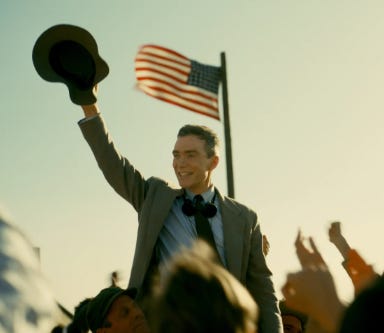
The same glory could have been Heisenberg’s - from helping Germany return to supremacy by decisively winning World War Two. Such a future - being the great scientific hero that brought Germany to victory - would have brought Heisenberg fame, adoration, wealth, and the ability to work on whatever else he wanted to achieve with no political or financial restrictions after the war.
BUT....
That would have meant that atomic bombs would be used on cities. (In our real timeline, the Nazis would have nuked New York before Washington.) Great cities like Moscow, London, and New York might have been obliterated with Heisenberg’s invention - if he had wanted to make the first atomic bombs.

But it would have made Adolf Hitler and his Nazi henchmen the most powerful men in the world, bringing a new dark age for anyone who cared about intellectual freedom - or any other kind. A terrible future, for anyone with compassion. Was young Werner Heisenberg ready to accept responsibility for such a world? Could he accept responsibility for possibly millions of deaths his invention would bring? His potential fame and glory would come with a heavy price.
Of course, so would the decision not to make the world’s first atomic bombs. If Nazi Germany didn’t develop them first, the Allies would. Germany could be defeated, and perhaps Frankfurt or Hamburg would be among the first cities disintegrated and melted by atomic bombs. The communists Heisenberg had suffered under as a young man would undoubtedly take power in the ruins of Berlin under Soviet occupation... IF he chose not to give Hitler the bombs he wanted.
And since Hitler KNEW Heisenberg felt that way - he used Heisenberg as a decoy. He let the Allies spy on Germany’s A-team of nuclear physicists (who disliked the Nazis and deliberately stalled and delayed atomic bomb progress at their facilities) while Germany’s B-team of relatively unknown physicists got all the secret funding and detonated the first atomic bomb prototype in late 1944.
And IF I have made this sound half as interesting as events actually were, you might want to read more about what really happened in the atomic bomb programs of both Germany and the United States - and learn how and where the first atomic bombs were really made - because the truth is very different from the propaganda written by the victors that we were taught in school.
